
Deer Damage in Midland, Michigan Landscapes and How to Protect Your Plants
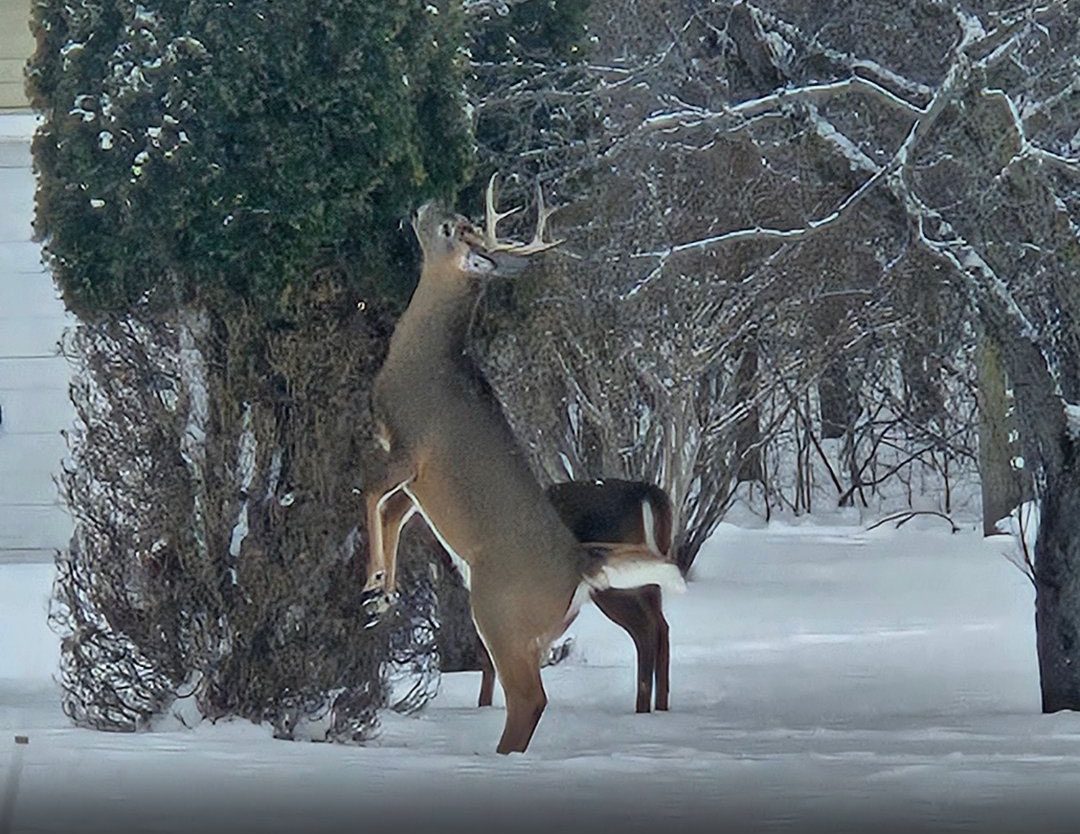
If you’ve stepped outside recently and noticed stripped evergreens, chewed shrubs, or hostas disappearing overnight, you’re not imagining it. Across Midland and surrounding areas, deer browsing has been heavier this winter, and not just on the plants they normally prefer. Even varieties long considered “deer resistant” are being sampled.
So what’s different this year, and what can you do to protect your landscape?
Why Deer Are Eating More Varieties Than Normal This Year
Deer feeding behavior is directly influenced by environmental conditions. This season in Midland, several factors have combined to increase browsing intensity:
1. Consistent Snow Cover and Limited Ground Forage
Since December, snowpack in Midland has been steady, covering most of the natural ground-level food sources deer would normally rely on. With perennials, low shrubs, and woodland understory buried, deer have turned to woody browse, including your landscape shrubs and evergreens, to meet their energy needs.
Extended snow cover doesn’t reduce feeding pressure; it redirects it. Landscapes with accessible evergreen material become reliable winter food sources.
2. Strong Local Deer Population
Deer populations in and around Midland remain stable to rising. Higher population density means more competition for food, which pushes deer to explore plants they might otherwise ignore. “Deer resistant” does not mean deer-proof, it just means lower preference.
3. Winter Nutritional Stress
Cold winter temperatures increase metabolic needs and slow digestion. As energy reserves decline, deer become less selective and are more likely to nibble on a wider variety of plants, including boxwood, hydrangeas, arborvitae, yews, and hostas.
4. Landscapes Offer Better Nutrition
Your yard is often a deer buffet compared to the snow-covered woods. Irrigation, fertilization, and tender new growth make landscape plants especially appealing.
5. Mild Days Increase Activity
With temperatures expected to rise into the 40s and low 50s over the next week, deer may be more active during daylight, extending feeding periods on your plants before colder weather returns.
Plants Seeing Increased Damage
This season, heavier browsing is being observed on:
- Arborvitae, including mature specimens
- Boxwood
- Yews
- Certain hydrangea varieties
- Hostas, now being eaten earlier than normal
Arborvitae are especially vulnerable because they do not regenerate from stripped interior wood. Early protection is critical.
How to Protect Your Landscape
The most effective protection strategy is layered and proactive.
Physical Barriers, the Most Reliable Option
- Temporary deer netting for winter
- Wire cages around vulnerable shrubs
- Burlap wrapping to reduce browsing and wind exposure
While a full 6–8 foot fence is required for complete exclusion, even partial barriers can reduce repeated feeding.
Repellents, Applied Consistently
- Apply in late fall and reapply after precipitation
- Rotate products periodically
Repellents are most effective as a preventive measure. Once deer establish a feeding routine, deterrence is more difficult.
Diversify Planting Design
Mix species, textures, and structures to reduce concentrated feeding. Long rows of one species make browsing easy.
Timing is Critical
Severe browsing usually occurs in late winter and early spring before green-up. Protection measures should be installed before snow begins.
Will Damaged Plants Recover?
Many will:
- Yews often rebound
- Hydrangeas may bloom from lower buds
- Boxwood can refill over time
Arborvitae do not push new growth from bare interior wood, making early protection especially important.
How Reder Can Help
Deer protection is most effective when it’s customized for your property. Reder can:
- Assess vulnerable plants and recommend protective measures
- Apply professional-grade deer repellents on a seasonal schedule
- Install protective netting or winter wrapping
- Recommend plant substitutions in high-pressure areas
- Design new landscapes with deer pressure in mind
Because we work in Midland and surrounding communities every day, we see seasonal patterns firsthand. That local experience allows us to respond proactively, helping you reduce winter damage and protect your landscape investment.
Call 989-835-8260 or click here to request an evaluation and protection plan for your landscape.
What to Expect for the Rest of Winter
With consistent snowpack, stable deer populations, and intermittent mild days, browsing pressure is likely to continue through late winter. Once spring green-up begins and more natural forage becomes available, deer may shift back to native plants, but damage to vulnerable yard plants can remain significant until then.