
5 Ways to Check if Your Plant Is Dead or Dormant
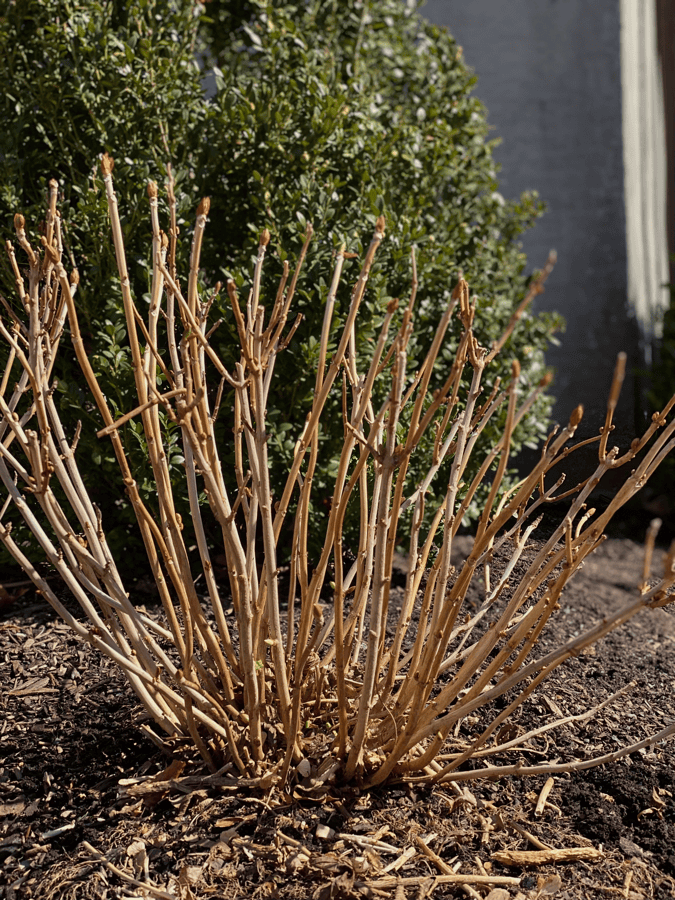
Dormant vs. Dead: What’s Really Going On?
In our Mid-Michigan climate, plants go dormant to survive winter. Everything above ground may look lifeless, but the roots are still alive and waiting for consistent warmth. The challenge? Early spring conditions can make dormant plants look completely dead. If you’re asking yourself; Is my hydrangea dead?, you should find this article very helpful.
How to know if your plant is alive?
1. The Scratch Test
This is the quickest and most reliable method.
Gently scratch the surface of a twig or stem with your fingernail:
- Green underneath → The plant is alive
- Brown and dry → That part is dead
Check a few different spots, especially closer to the base. Sometimes the top dies back, but the lower portion is still alive.
2. Look for Buds
Even before leaves appear, many trees and shrubs will start forming buds.
- Small, swollen buds = a good sign
- Dry, brittle stems with no bud growth = cause for concern
In Midland, many plants won’t show obvious buds until late April or even May, depending on the weather.
3. Bend Test (for Smaller Branches)
Carefully bend a small branch:
- Flexible and bends without snapping → likely alive
- Snaps easily and is dry inside → dead wood
4. Check the Base of the Plant
Sometimes the top growth doesn’t make it through winter, but the roots are still healthy.
Look for:
- New shoots at the base
- Green growth emerging from the crown
This is common with perennials and some shrubs after a harsh winter.
5. Be Patient with Michigan’s Spring
Our climate can delay growth more than expected. Some plants that are notoriously slow to wake up include:
- Hydrangeas (especially certain varieties)
- Butterfly bush
- Rose of Sharon
- Ornamental grasses
It’s not unusual for these to look completely lifeless until mid-to-late May.
Signs a Plant Is Likely Dead
While patience is important, these signs usually point to a plant that won’t recover:
- No green tissue anywhere (even near the base)
- Bark is shriveled, cracked, or peeling away
- Branches are brittle throughout the entire plant
- No buds or swelling after consistent warm weather
What You Should (and Shouldn’t) Do
Do:
- Wait until consistent warmer temps (late April–May) before making final decisions
- Prune out clearly dead branches
- Give plants time to respond naturally
Don’t:
- Cut everything back too early
- Assume it’s dead after a few warm days
- Overwater in an attempt to “wake it up”
When to Call It
In Midland, a good rule of thumb:
- Early April: Too soon to tell
- Late April–early May: Start checking more closely
- Mid-to-late May: Most plants should be showing life if they’re going to recover
If there’s still no sign of growth by then, it may be time to consider replacement.
A Local Perspective
Our winters and unpredictable spring temperatures can be tough on landscapes. Freeze-thaw cycles, late frosts, and fluctuating soil temperatures all play a role in delayed growth, or plant loss. If you’re unsure, it’s always better to give plants a little more time before removing them. What looks like a lost cause in early spring often surprises people a few weeks later.
We’re always here to help. If you would like a professional evaluation of your plants give us a call at 989-835-8260 or click here.