
Best Time to Apply Grub Control in Midland, MI (Spring 2026 Guide)
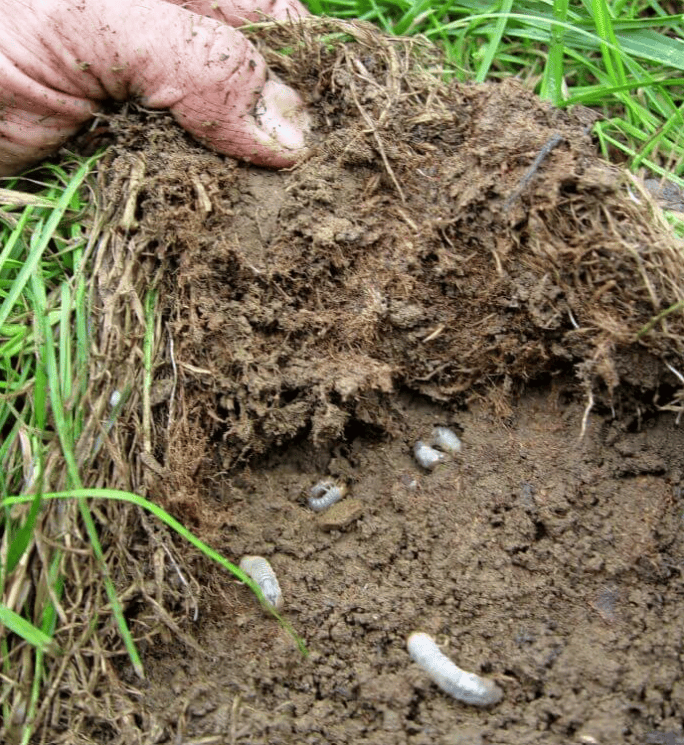
Every spring, homeowners across Mid-Michigan start thinking about grub control as soon as the lawn greens up. But when it comes to preventing grub damage, applying treatments too early can actually reduce effectiveness. The key isn’t simply the calendar date, it’s soil temperature.
In Midland and throughout central Michigan, spring 2026 has brought cooler temperatures, slower soil warming, and wetter-than-average conditions. That delayed warm-up is shifting the ideal timing window for grub prevention slightly later than usual. Understanding why soil temperatures matter can help homeowners avoid one of the most common mistakes in lawn care: applying preventive grub control before the treatment window truly begins.
Why Timing Matters for Grub Control
Grubs are the larvae of beetles such as:
- Japanese beetles
- European chafers
- Masked chafers
These insects spend most of their life cycle underground feeding on grassroots. The most severe lawn damage typically occurs in late summer and early fall when newly hatched grubs are actively feeding near the soil surface.
That’s why preventive grub treatments are designed to target young grubs shortly after egg hatch, not mature grubs in early spring. According to Michigan State University Extension, preventive grub products containing ingredients such as imidacloprid are most effective when applied in June or July, closer to peak egg hatch timing.
The Role Soil Temperatures Play
Soil temperature drives nearly every stage of grub development:
- Overwintered grubs become active as soils warm in spring
- Adult beetles emerge once sufficient heat accumulates
- Egg hatch begins later in summer after sustained warm conditions
When spring soil temperatures stay cooler longer, insect development slows down. That matters because preventive treatments need to remain active in the root zone when young grubs begin feeding later in the summer. If products are applied too early during cool spring conditions, they may begin degrading or moving through the soil before peak grub activity arrives. MSU Extension specifically warns that preventive grub products applied in early spring may lose effectiveness by the time grubs hatch in late July.
What Spring 2026 Means for Midland Lawns
Due to our spring weather conditions:
- Beetle emergence is expected to run slightly behind normal
- Egg-laying may occur later than usual
- Preventive treatment timing may shift further into June
Rather than rushing to apply grub control during the first warm week of spring, this year’s conditions favor a more patient approach. For most preventive grub applications in Midland, the ideal timing window in 2026 is shaping up to be:
Late May through early July
This timing better aligns with:
- soil temperature trends,
- beetle development,
- and the period when young grubs will begin feeding.
Why Early Spring Applications Often Disappoint
One of the most common lawn care misconceptions is that earlier is always better. Preventive grub products are not designed to kill every grub currently in the soil during spring. In fact, mature overwintered grubs are harder to control because they are nearing the pupation stage and feeding less aggressively.
Preventive products work best when:
- young grubs are newly hatched,
- feeding near the surface,
- and highly susceptible to treatment.
Applying too early can shorten the effective protection window before peak grub activity even begins. That’s why professional lawn care programs focus heavily on seasonal timing rather than simply applying products as early as possible.
Soil Moisture Matters Too
Spring rainfall and soil moisture also affect grub control performance. Preventive treatments need adequate moisture to move into the soil profile where roots, and eventually grubs, are located. After application, lawns typically require about a half inch of irrigation or rainfall to properly activate the treatment. However, excessively wet soils and heavy spring rains can also increase movement through the soil profile if applications are made too early. In a wetter spring like 2026, proper timing becomes even more important.
Healthy Lawns Handle Grubs Better
Another important point often overlooked is that healthy turf can tolerate some grub activity without severe visible damage. MSU Extension notes that well-maintained lawns with strong root systems can often support low grub populations without major turf loss.
Practices such as:
- proper mowing height,
- balanced fertilization,
- irrigation management,
- and soil health improvement
These all help lawns become more resilient against both insects and summer stress.
We’re Here to Help!
If you want a grub-free lawn without having to monitor soil temperatures and moisture levels, leave it to the experts! We take pride in maintaining beautiful lawns in Midland, MI. Call 989-835-8260 or click here to request a grub evaluation and treatment plan.