
5 Must-Do’s for Your Lawn This Fall
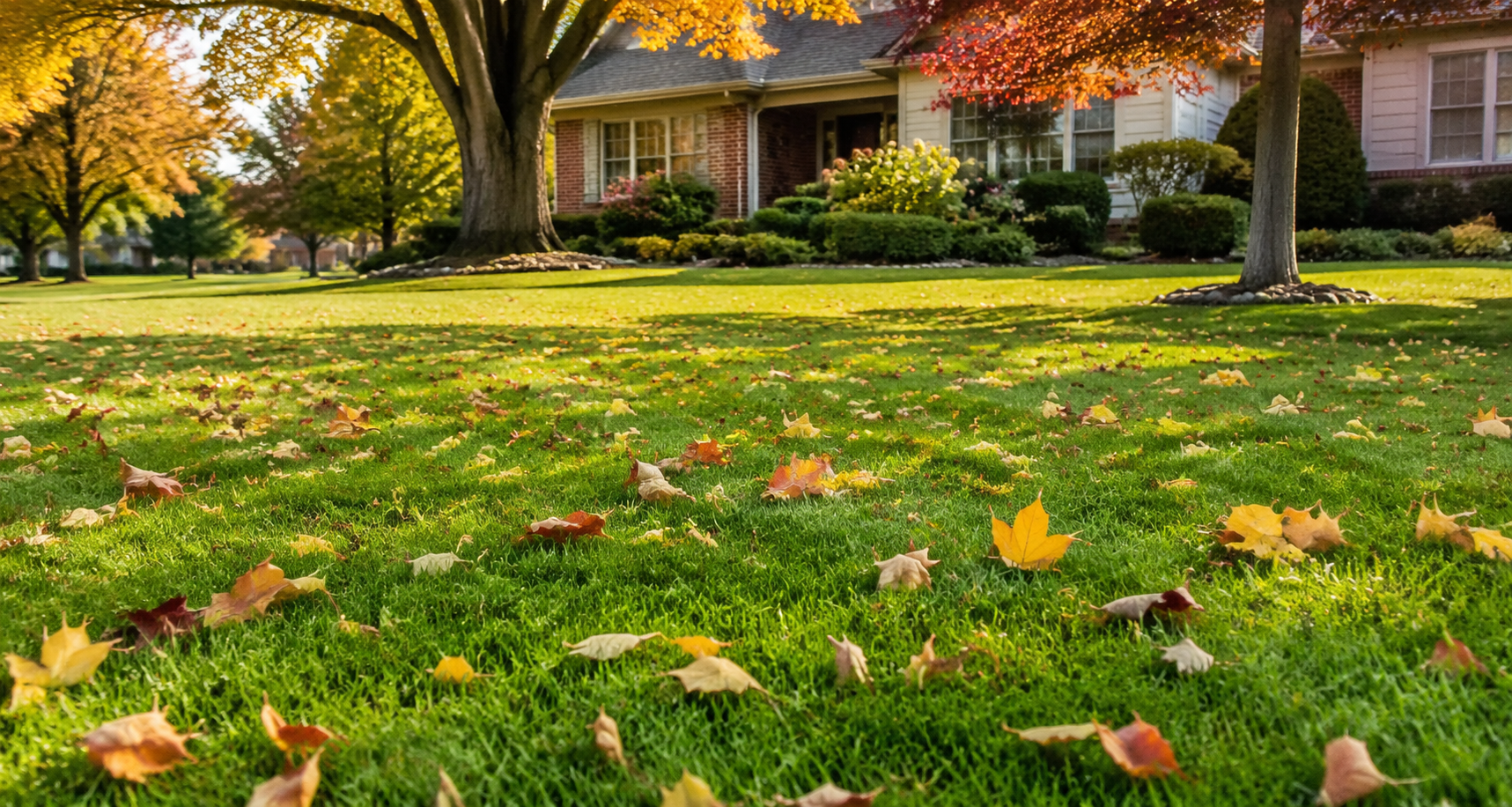
Summer can be tough on Michigan lawns. Heat, humidity, heavy rain and stretches of dry weather can all leave grass looking a little tired by the end of August. But there is a noticeable shift in the weather. Daily temperatures are still reaching summer highs but the mornings have a crisp, coolness to them that is unmistakably fall. As we welcome the ‘ber’ months, now is a great time to help your lawn recover while preparing it for the cooler months to come.
1. Keep Mowing at the Right Height
Continue mowing at about 3 to 3.5 inches through late summer and early fall. Taller grass shades the soil, holds moisture and encourages deeper roots while your lawn recovers from summer stress. Later in the season, gradually lower your mower until the final cut is about 2.5 inches. This helps keep grass from becoming matted beneath leaves and snow over the winter.
2. Schedule Core Aeration or Core Aeration with Overseeding
Every lawn benefits from annual core aeration, whether your lawn is healthy and thriving or a bit thin and tired. The process of a core aeration helps relieve compaction and allows water, air and nutrients to reach the roots more effectively, every lawn can benefit from that. If your lawn has become thin, patchy or damaged over the summer, pairing core aeration with overseeding helps fill bare areas and encourage thicker growth. Early fall provides warm soil, cooler air and ideal growing conditions for new grass.
3. Give Your Lawn a Fall Feeding
Fall fertilization helps your lawn recover from summer and build stronger roots before winter. Rather than encouraging only quick growth on top, the right fall application helps grass store the nutrients it will need through dormancy and into next spring.
4. Adjust Watering with the Weather
Even with cooler days approaching, your lawn still needs consistent moisture. Watch rainfall rather than assuming an occasional shower has provided enough water, especially if you have new seed that is becoming established. As temperatures cool and growth slows, watering can gradually be reduced. Irrigation can be shut down once the growing season ends and freezing temperatures arrive.
5. Keep Leaves off the Lawn
As beautiful as they are, fallen leaves can mean trouble for your lawn. A light scattering of leaves can be mulched with your mower, but thick layers should be removed regularly. Leaves left sitting on the lawn block sunlight, trap moisture and can smother the grass underneath. Keeping the lawn clear throughout fall helps prevent bare areas and disease problems next spring.
Give Your Lawn a Stronger Start Next Spring
What you do for your lawn now can make a big difference in how it looks next year. Proper mowing, annual core aeration, overseeding when needed, fall fertilization, consistent watering and regular leaf removal will help your lawn recover from summer and prepare it for the freezing temperatures to come.
We can help!
Ready to schedule your fall lawn services? Give us a call at 989-835-8260 or contact us here.